
Can We Turn Back Time?
Can We Turn Back Time?
What keeps a living system young—and could restoring its repair programmes help us recover youthful function?

In this essay
Ageing is one of the most consequential biological processes we know. Turning back time biologically would mean restoring the properties of youth to ageing cells and tissues. To understand how far that might be possible, we first need to understand what keeps a living system young.
That question was at the heart of my recent talk to the Cambridge Ageing Research Society, From Cellular Reprogramming to Rejuvenation: Measuring and Engineering Biological Age.
Much of my career has been spent confronting the limits of repair. As a neurosurgeon, I saw the consequences of degeneration and age-related deterioration at first hand. My work in regenerative medicine and stem cell biology led me to look at the problem from another direction: what enables tissues to maintain themselves—and could we restore that capacity as it declines?
My working hypothesis is that youth depends, at least in part, on repair keeping pace with ongoing damage. If this is correct, rejuvenation requires us to understand both the damage that accumulates and the biological programmes that sustain youthful function.
At clock.health, we are investigating whether we can restore those programmes and help tissues regain their capacity to maintain and repair themselves.
Youth depends, at least in part, on repair keeping pace with ongoing damage.
A working hypothesis
1. What is youth?
Ageing research has made remarkable progress in identifying what goes wrong as we grow older. The hallmarks of ageing framework brings much of this knowledge together, encompassing genomic instability, epigenetic alterations, mitochondrial dysfunction, cellular senescence and chronic inflammation, among other processes. The framework’s 2023 expansion provides a useful map of this interconnected biology. (López-Otín and colleagues, 2023.)
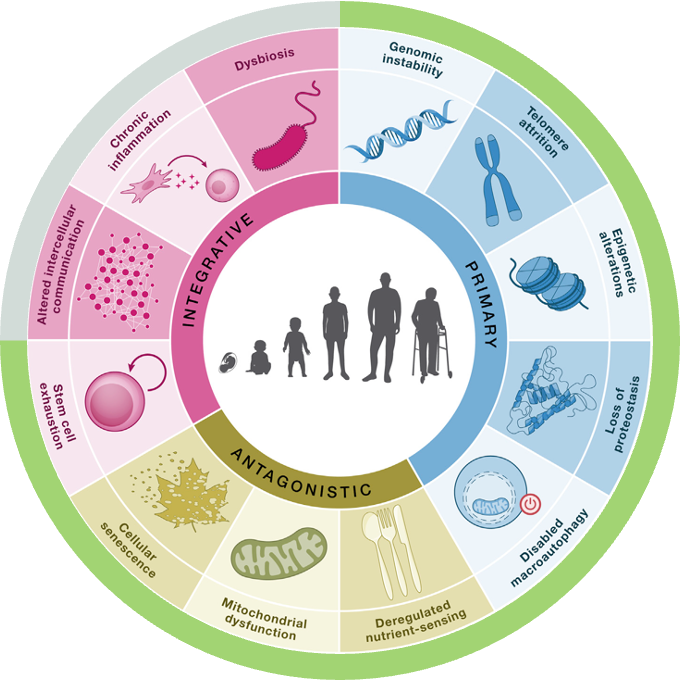
But a living cell is also continually renewing itself. Molecular components turn over. Damaged proteins are degraded. DNA repair systems respond to injury. Maintenance processes adapt to changing conditions.
This creates a conceptual puzzle: why does ageing persist in a system that continually replaces and repairs its components? Why does damage not simply wash out?
One possible explanation lies in the changing balance between damage and repair. A cell’s condition depends on how much damage it experiences, how effectively it detects that damage, and how well it repairs or compensates for it.
This leads to a different way of framing the problem: what if youth is a state of heightened biological maintenance and repair?
Age-related decline may have many causes, and some forms of damage—such as acquired genetic mutations—are not reversible. Nevertheless, this hypothesis gives us something practical to investigate. If aspects of youthful function depend on identifiable regulatory programmes, we can ask how those programmes change with age and whether they remain accessible to intervention.
That makes at least part of the rejuvenation question experimentally approachable.
2. Measuring biological age—and understanding what it means
To investigate rejuvenation, we first need ways to measure change.
Biological clocks have transformed this task. Horvath’s epigenetic clock showed that patterns of DNA methylation could estimate age across multiple human tissues. Researchers have since developed approaches based on gene expression, proteins, metabolites and imaging. (Horvath, 2013.)
Even facial photographs contain age-associated information. The FaceAge study, for example, examined how an age estimate derived from facial appearance could contribute to prognosis in people with cancer. (Bontempi and colleagues, 2025.)
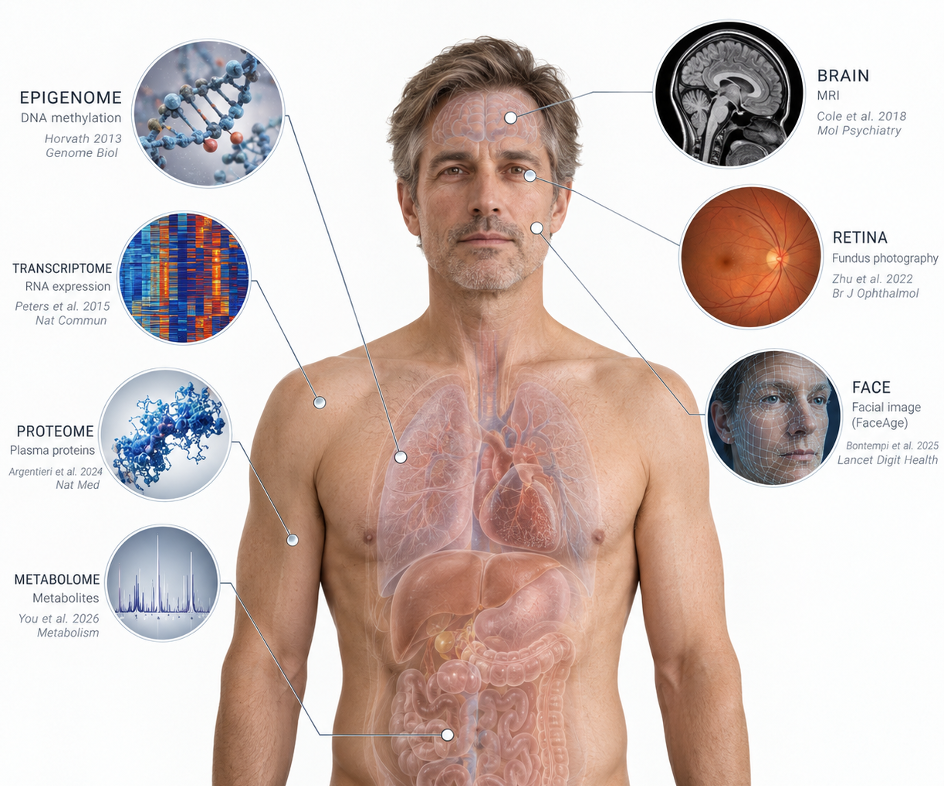
These tools give researchers measurable readouts of biological state. We can test whether an intervention changes an age-associated signature, compare responses between individuals and investigate which features carry the most useful information.
The challenge is interpreting what those measurements mean.
A clock captures a pattern associated with age; it does not automatically explain the mechanism producing that pattern. Moving an epigenetic or transcriptomic age estimate towards a younger value does not, by itself, establish that tissue function has been restored or healthy lifespan extended.
Different clocks also capture different aspects of biology. Their usefulness depends on how they were constructed, where they were validated and which outcomes they can predict.
Nor does the body necessarily age as a single unit. Large-scale studies have identified different organ-ageing signatures within the same person. Kidney ageing, cardiovascular ageing and changes across other organ systems need not follow the same trajectory. (Oh and colleagues, 2023.)
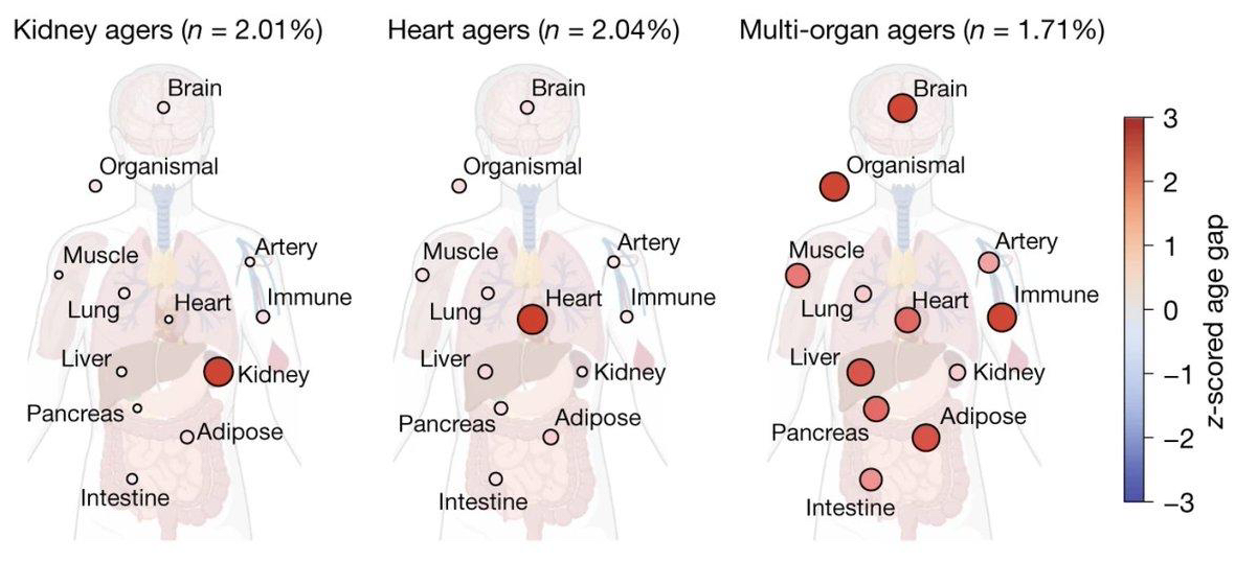
Disease adds another layer. Age-related deterioration may reduce resilience and contribute to disease, while disease-associated inflammation and damage may accelerate aspects of biological ageing. The direction and strength of these relationships will vary between conditions and individuals.
For me, this defines the next stage of the field. We need to connect the measurements to the processes that produce them, learn to manipulate those processes reproducibly, and demonstrate that the resulting changes improve something that matters.
3. What reprogramming taught us
Cellular reprogramming changed what we considered biologically possible.
Takahashi, Yamanaka and colleagues demonstrated that a defined set of transcription factors could turn mature human cells into induced pluripotent stem cells—cells capable of giving rise to many different cell types. (Takahashi and colleagues, 2007.)
Subsequent research showed that this transformation could also reset many age-associated characteristics.
Lapasset and colleagues reprogrammed fibroblasts from centenarian donors and then differentiated them again. This made it possible to compare old and rejuvenated versions of cells from the same individuals, revealing how extensively aspects of cellular physiology could change. (Lapasset and colleagues, 2011.)
These findings challenged the assumption that cellular age is an irreversible consequence of elapsed time.
They also exposed a practical problem. Rejuvenating a cell in a functioning tissue is useful only if it can still do its job. A neuron must remain a neuron; a skin cell must retain the characteristics that allow it to function as skin.
Complete reprogramming erases that specialised identity. Returning cells to pluripotency is therefore not, by itself, a practical way to rejuvenate an intact tissue.
Separating age from identity
Partial reprogramming attempts to recover selected youthful characteristics while preserving cellular identity and function.
Experiments suggest that this separation is possible under particular conditions. Sarkar and colleagues investigated transient reprogramming in cultured human cells (2020). Lu and colleagues reported optic nerve regeneration and improvements in visual function in mouse experiments using reprogramming factors (2020).
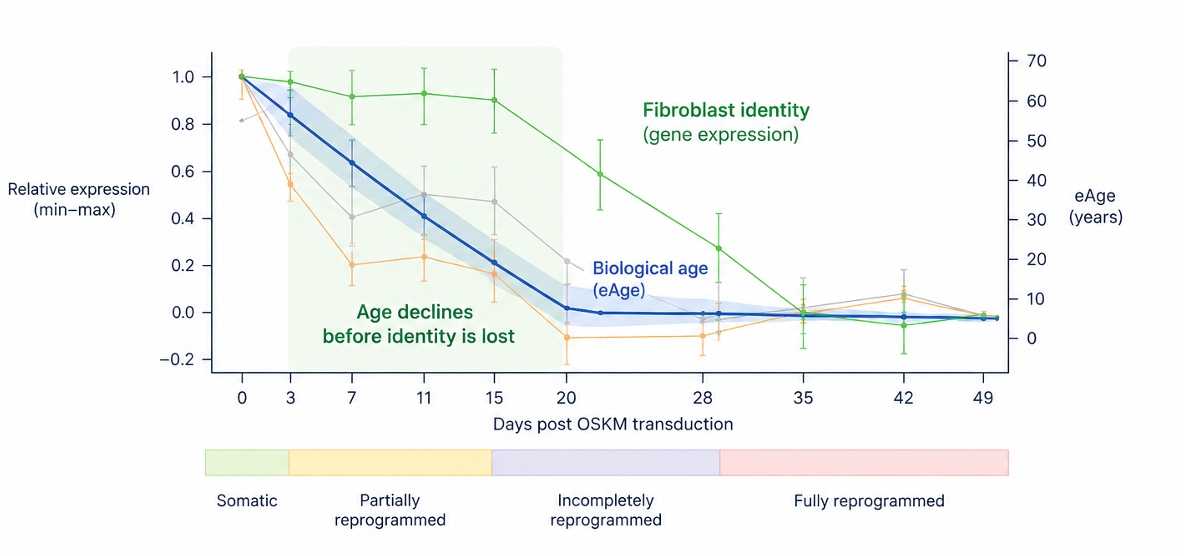
Researchers have also investigated effects on lifespan. One study reported increased remaining lifespan after partial reprogramming in very old male mice. (Macip and colleagues, 2024.)
The implications are compelling. Translating them into treatment, however, requires control over delivery, dose and duration, together with evidence of safety and benefit in humans. Disrupting cellular identity or growth control can carry serious risks. Those challenges become particularly substantial when considering whole-body rejuvenation.
This is where my interest extends beyond reprogramming itself.
Transcription factors regulate networks of genes. The downstream biological programmes carry out the processes involved in cellular maintenance. If we can identify the effectors responsible for useful changes, we may be able to influence them more selectively through small molecules or other modalities suited to controlled pharmacological development.
We can therefore use reprogramming to ask a more targeted question: which parts of this biology can become practical interventions?
4. Finding the programmes that sustain youth
The research behind clock.health began with a question about control: which biological programmes distinguish youthful cells, and could manipulating them restore a younger state?
To answer it, we needed a model in which we could observe ageing-associated changes emerge, measure recovery and investigate what influenced both.
Pluripotent stem cells offered a useful starting point. They can maintain unusually youthful characteristics over extended periods in culture, although they are not immune to deterioration. This makes them valuable for studying the relationship between cellular state, maintenance and ageing.
We first explored several ways of inducing damage. Individual interventions did not reproduce the breadth of ageing-associated changes we wanted to investigate. We then turned to progerin, a truncated form of lamin A associated with Hutchinson–Gilford progeria syndrome.
Controllable progerin expression allowed us to make several ageing-associated features appear rapidly in induced pluripotent stem cells.
The most interesting observation came when we stopped that expression: under our experimental conditions, the cells recovered and restored the initial state.
That recovery gave us both a question and a tool. Which genes influenced the ageing phenotype, and which processes helped the cells recover?
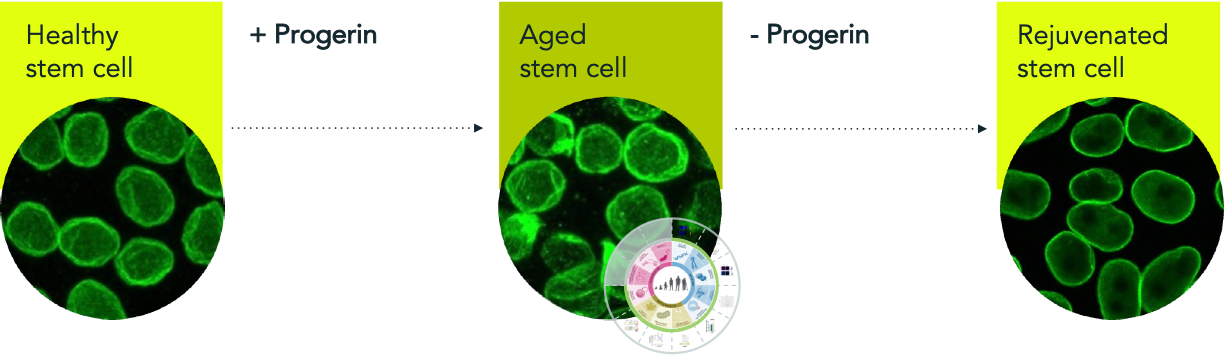
Progerin-induced cellular ageing is a specific experimental model. It does not reproduce the full complexity of natural ageing, and recovery after progerin withdrawal does not establish that removing one source of damage can reverse human ageing.
Its controllability nevertheless made the relationship between ageing pressure and cellular maintenance experimentally accessible. We could now investigate the genes influencing the measured phenotype.
geneAge: A functional atlas of 151 genes
Over approximately three years, working with collaborators in functional genomics, we conducted six whole-genome CRISPR screens.
These screens identified 151 genes significantly associated with changes in our transcriptomic ageing signature—a pattern of gene activity used to assess the cells’ state.
We classified them into two broad functional groups:
- 40 rejuvenation-associated genes: genes whose activation was associated with a shift towards a younger measured state.
- 111 ageing-associated genes: genes whose inhibition was associated with a shift towards a younger measured state.
These groups point to different ways of intervening. Some processes may need to be strengthened; others may need to be restrained.
We next asked how far this biology extended beyond the original stem-cell model. Our analyses indicated that the gene set was expressed across multiple adult tissues and overlapped substantially with established ageing, longevity and disease-associated pathways.
Network analysis revealed another feature: a connected core of interacting genes, accompanied by more specialised peripheral modules.
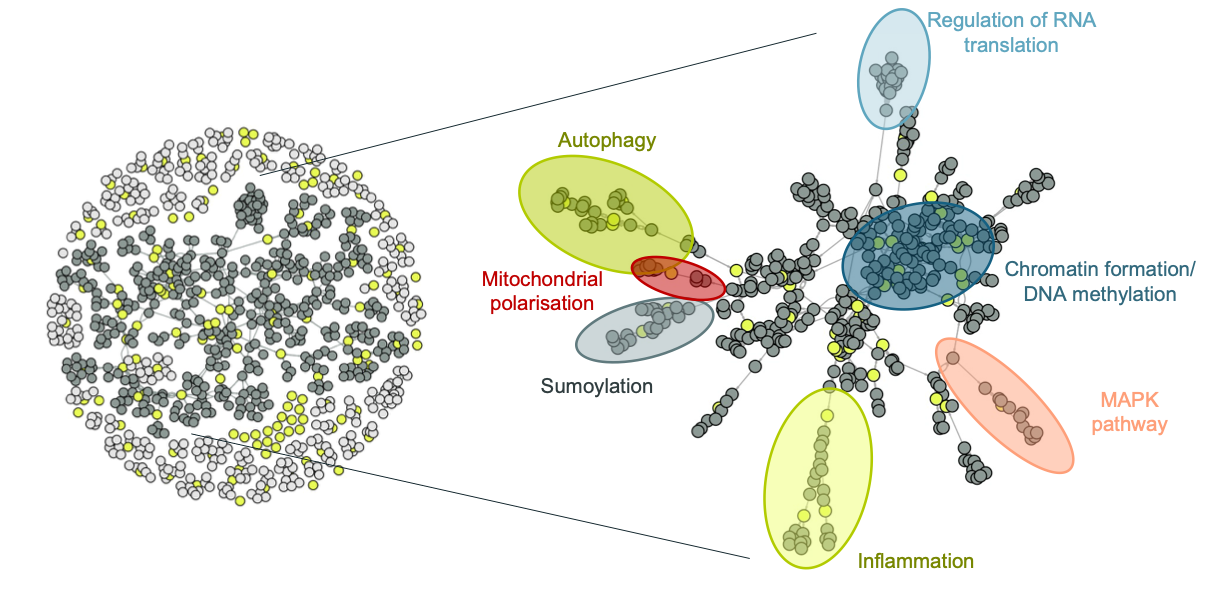
Together, these findings began to outline a regulatory architecture of cellular ageing. They did not establish that every gene has the same role in every tissue, or that changing any particular target would benefit an organism.
But they gave us a set of biologically informed candidates—and a route towards testing whether genetic discovery could guide compound selection.
5. Turning genetic discovery into a screening platform
Finding candidate genes was one challenge. Testing enough interventions to learn from them was another.
Large-scale compound screening requires measurements that can be repeated efficiently across doses, combinations and time points. It must also help distinguish promising interventions from those that simply push a measurement in an unhelpful direction.
Epigenetic clocks have been invaluable to ageing research. For screening, we wanted an additional tool that was fast, scalable and suited to this experimental workload.
We developed imAgeScore, an image-based approach that uses cell painting, fluorescent dyes and high-content microscopy to estimate cellular phenotypic age.
Its measurements correlated with chronological donor age and with Horvath’s epigenetic clock. They also retained information after adjustment for chronological age.
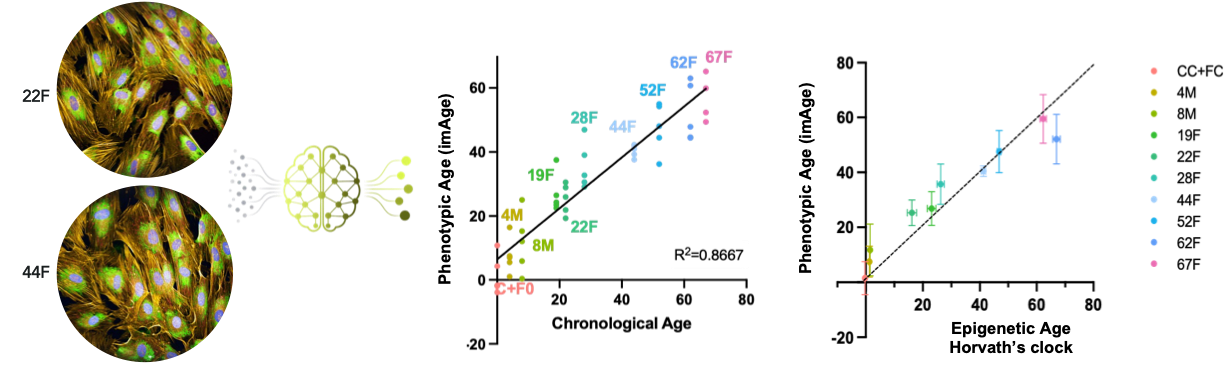
We designed imAgeScore to work alongside other assays. It gives us a practical way to investigate whether an intervention changes cellular features in a direction associated with rejuvenation, while further measurements help establish what that change means.
Testing whether the genetic findings translate
We then moved from the original stem-cell model to human fibroblasts.
Using siRNA knockdown to reduce selected genes’ activity, we found that most of the genes tested shifted the measured phenotype in the expected direction. Some did not—a reminder that a target’s effects can depend on the cellular context.
Where suitable small molecules were available, pharmacological perturbation often produced changes consistent with the corresponding genetic intervention.
This agreement mattered. It connected genetic discovery to potential pharmacology and gave us a reason to investigate whether the atlas could make compound screening more productive.
What the drug screens revealed
We initially screened the Tocris library, including 190 FDA-approved drugs. Approximately 15% showed some age-modulating activity in the assay, with around 5% producing predicted age shifts greater than ten years.
We then used our geneAge atlas to select compounds more systematically.
In this selected group, approximately 90% produced shifts exceeding 2.5 predicted years, and around 50% exceeded ten predicted years.
The contrast suggests that selection informed by biological mechanisms can improve screening efficiency and help us move beyond random compound selection. The groups were selected differently, however, so these figures should not be read as a controlled comparison of otherwise identical screens.
The meaning of “predicted years” also needs to remain clear. These are changes in the model’s estimate of cellular phenotypic age. They are not equivalent to years of age reversal in a person.
A large shift gives us a candidate to investigate. We still need independent validation, experiments in additional cell systems, and careful assessment of safety and biological function.
What encourages me is the possibility of a more directed discovery process: using knowledge of the underlying biology to choose interventions, test their effects and improve the next round of predictions.
6. Why rejuvenation may need combinations
Our results point to multiple pathways influencing the ageing and rejuvenation signatures we study, with no single master switch apparent.
That makes biological sense. Cellular maintenance involves interacting processes, and an individual intervention may influence only part of the network.
It also gives us a reason to investigate combinations.
The TRIIM trial provided an interesting clinical example. Fahy and colleagues studied a regimen involving growth hormone, DHEA and metformin, initially focusing on thymic regeneration and immune-system restoration. They also reported changes in epigenetic-age measurements after treatment. (Fahy and colleagues, 2019.)
This was a small, uncontrolled pilot study, with nine men completing treatment. Its findings warrant follow-up, but they cannot establish that the regimen is a generally effective or appropriate anti-ageing treatment, or that its components acted synergistically.
We explored how the combination behaved in our cellular assay. The individual components did not stand out strongly. Together, however, they produced a signal close to the assay’s detection threshold.
The estimated change was of a similar numerical order to the clinical biomarker finding. That correspondence was interesting, although predicted years from different clocks and tissues are not directly interchangeable. It does not establish that the assay reproduces the clinical intervention or that similar effects will occur in other people or tissues.
Other combinations produced much larger shifts than individual compounds. In some fibroblast experiments, the model estimated changes in phenotypic age of approximately 40–60 years.
Those are striking results. They are also model-derived measurements in an experimental system; they do not mean that a human tissue has become 40–60 years younger.
The next task is to understand them. How reproducible are the changes? Which mechanisms produce them? Do they correspond to meaningful improvements in tissue function?
Developing a useful combination also means understanding interactions, toxicity, dose and duration. Rational polypharmacology requires a coherent explanation of why the components belong together, followed by evidence that the combined intervention is effective and safe.
Biologics, peptides and gene-based approaches may also have roles in rejuvenation research. Each modality brings different possibilities and practical constraints.
The questions I return to are the same: can an intervention reproducibly influence the relevant biology, reach the intended tissue, achieve an appropriate safety profile and produce a meaningful effect?
Existing small molecules could offer advantages in cost, scalability and development. How valuable those advantages prove will depend on the compound, its formulation, its mechanism and the indication being pursued.
7. Why we are starting with skin
Whatever the modality, the eventual test is in human tissue.
At clock.health, we have chosen skin as our first setting for investigating whether discoveries from the platform translate into human applications.
Skin is accessible, supports local delivery and allows repeated measurements over time. These features make it possible to work iteratively in ways that would be much harder when targeting the brain or other less accessible organs.
We want to determine whether interventions selected through our discovery platform produce coherent evidence of rejuvenation in human skin.
That requires several independent views of what is happening. We plan to investigate measurements that may include:
- Epigenetic markers associated with biological age.
- Standardised assessments of skin appearance.
- Structural imaging, including optical imaging techniques.
- Skin elasticity and other mechanical properties.
- Skin barrier function.
Each captures a different aspect of tissue biology. When several independent measurements move in a consistent direction, they make a stronger case than a change in one biomarker alone.
Disagreement can be equally useful. An intervention might improve appearance without changing barrier function, or affect one molecular measurement without producing broader structural changes. Understanding those differences helps us define what the intervention actually does.
Study design is therefore central to the science. Appropriate controls, predefined endpoints, repeatable measurements and safety assessments are needed to separate biological effects from measurement variability or transient cosmetic changes.
Skin offers a practical bridge between cellular discovery and human biology. Crossing that bridge still requires rigorous clinical development.
8. Building a learning system
Our longer-term ambition at clock.health is to make discovery and human observation part of a continuous learning process.
The sequence begins in cellular models. We identify candidate interventions, prioritise promising compounds and combinations for further validation, and progress to human skin studies where the evidence justifies doing so.
Then the information needs to flow back.
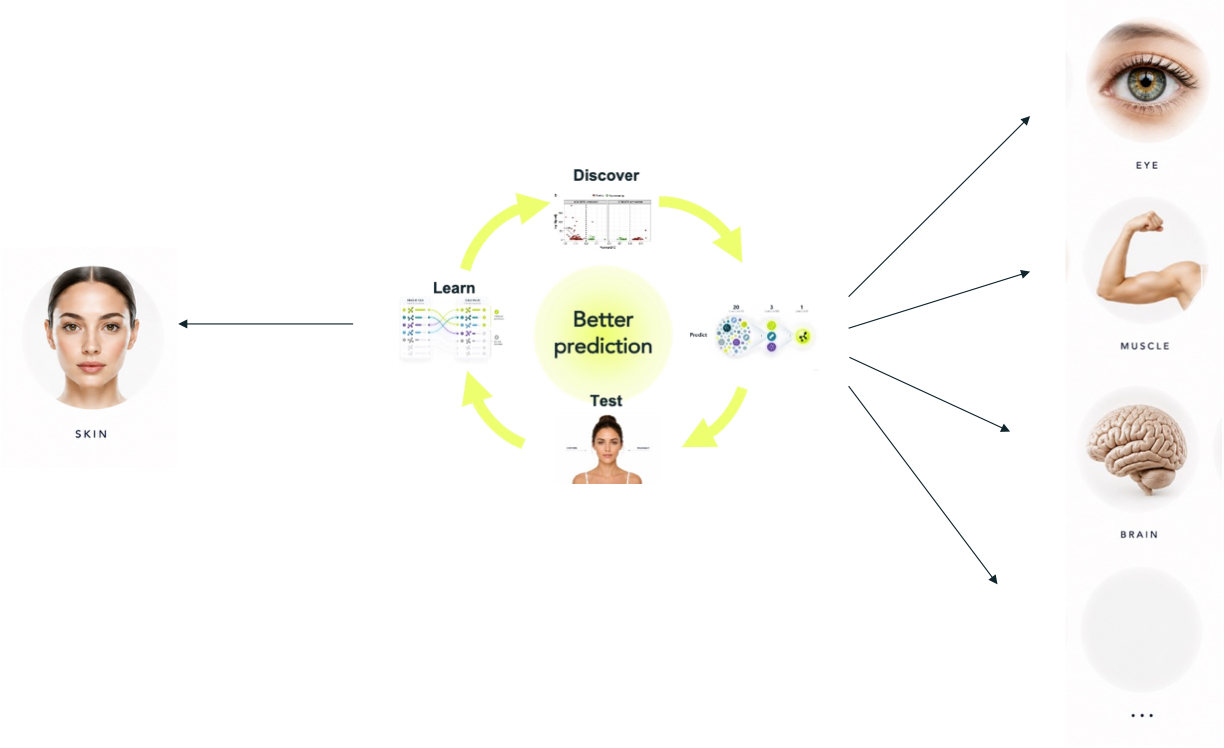
If an intervention changes a cellular age signature but produces little coherent effect in human skin, we need to understand why. If a combination produces consistent changes across several independent measurements, we need to identify which mechanisms and assay features best predicted that response.
Both outcomes can improve the platform. Every well-designed human study gives us an opportunity to refine what we test next and how we interpret the results.
Over time, we hope this process will distinguish biological programmes shared across tissues from effects specific to particular cell types or organs.
The eye, muscle and brain are potential future applications. Each presents different biological challenges, and findings in skin cannot simply be carried across without further evidence.
The ambition is to become more predictive: to understand which interventions produce useful effects in a particular human tissue, and which experimental signals help us anticipate those effects.
9. The next phase of rejuvenation science
I expect cosmetics and aesthetic medicine to lead the early translation of rejuvenation science. Skin offers accessible tissue, local delivery and established ways to assess changes in appearance, structure and function.
My bolder prediction is that, within the next twelve months, we will see evidence of age reversal in facial skin reflected across multiple independent measurements. The important advance will be a consistent picture across molecular markers, tissue structure, function and appearance. Establishing the extent and durability of those changes will require controlled studies.
I also expect interventions targeting multiple hallmarks of ageing to produce more robust rejuvenation and, ultimately, improved outcomes in age-related conditions. As we understand how these processes interact, combination drugs will become increasingly common in rejuvenation medicine. Their development will require careful selection of complementary mechanisms, doses and treatment schedules.
For broader medical applications, I see the most practical route to human rejuvenation today running through specific diseases and clinical needs. New indications will progressively push the boundaries. Metabolic syndrome and pre-surgical optimisation are two examples: both offer opportunities to investigate whether improving biological resilience can produce meaningful benefits for patients.
These are my predictions for where the field is heading. Demonstrating safety and clinical benefit will determine how far and how quickly it can advance.
Developing interventions for otherwise healthy people raises difficult questions about acceptable risk, long-term safety, regulatory endpoints and access. A biomarker change alone cannot justify exposing someone to a potentially harmful intervention.
Affordability and equitable access should be part of the discussion from the outset. If effective rejuvenation therapies emerge, their social value will depend on how widely their benefits can be shared.
Tackling ageing belongs to a long tradition of removing constraints on human life. Law and stable institutions have improved security. Agriculture and industry have expanded our ability to provide food and shelter. Antibiotics transformed the treatment of bacterial infections. The internet widened access to information; AI may extend what we can do with it. Rejuvenation raises the possibility of another advance: more years of health and independence.
This brings me back to the opening question:
Can we turn back time?
We may not need to.
We may just need to figure out how to restore repair.
References and further reading
- López-Otín C, Blasco MA, Partridge L, Serrano M, Kroemer G. Hallmarks of Aging: An Expanding Universe. Cell. 2023;186(2):243–278.
- Horvath S. DNA methylation age of human tissues and cell types. Genome Biology. 2013;14.
- Bontempi D, Zalay O, Bitterman DS, et al. FaceAge, a deep learning system to estimate biological age from face photographs to improve prognostication: a model development and validation study. The Lancet Digital Health. 2025;7(6):100870.
- Oh HS-H, Rutledge J, Nachun D, et al. Organ aging signatures in the plasma proteome track health and disease. Nature. 2023;624:164–172.
- Takahashi K, Tanabe K, Ohnuki M, et al. Induction of pluripotent stem cells from adult human fibroblasts by defined factors. Cell. 2007;131(5):861–872.
- Lapasset L, Milhavet O, Prieur A, et al. Rejuvenating senescent and centenarian human cells by reprogramming through the pluripotent state. Genes & Development. 2011.
- Sarkar TJ, Quarta M, Mukherjee S, et al. Transient non-integrative expression of nuclear reprogramming factors promotes multifaceted amelioration of aging in human cells. Nature Communications. 2020;11:1545.
- Lu Y, Brommer B, Tian X, et al. Reprogramming to recover youthful epigenetic information and restore vision. Nature. 2020;588:124–129.
- Macip CC, Hasan R, Hoznek V, et al. Gene Therapy-Mediated Partial Reprogramming Extends Lifespan and Reverses Age-Related Changes in Aged Mice. Cellular Reprogramming. 2024;26(1):24–32.
- Fahy GM, Brooke RT, Watson JP, et al. Reversal of epigenetic aging and immunosenescent trends in humans. Aging Cell. 2019;18(6).
- Brandhorst S, et al. Fasting-mimicking diet causes hepatic and blood markers changes indicating reduced biological age and disease risk. Nature Communications. 2024;15:1309.
- Chan MS, Arnold M, Offer A, et al. A Biomarker-based Biological Age in UK Biobank: Composition and Prediction of Mortality and Hospital Admissions. The Journals of Gerontology: Series A. 2021;76(7):1295–1302.
- Waziry R, Ryan CP, Corcoran DL, et al. Effect of long-term caloric restriction on DNA methylation measures of biological aging in healthy adults from the CALERIE trial. Nature Aging. 2023;3:248–257.
- Corley MJ, Dwaraka VB, Pang APS, et al. Semaglutide slows epigenetic aging in a randomized trial of HIV-associated lipohypertrophy. Nature Communications. 2026;17:6606.